
Filters & Navigation
Dynamic Product Filters and How to Use Them
Dynamic filters adapt to context, stock and campaigns in real time. Learn how to use dynamic product filters to help shoppers find products faster.
Automate every step of your product catalog, from data enrichment and content creation to photo optimization.
Explore the PlatformStreamline operations with automated workflows for every industry, business model, and role.
Explore solutionsFilters & Navigation
Better site structure starts with a category audit, not code. Learn how to improve navigation, scalability and conversions across your ecommerce store.
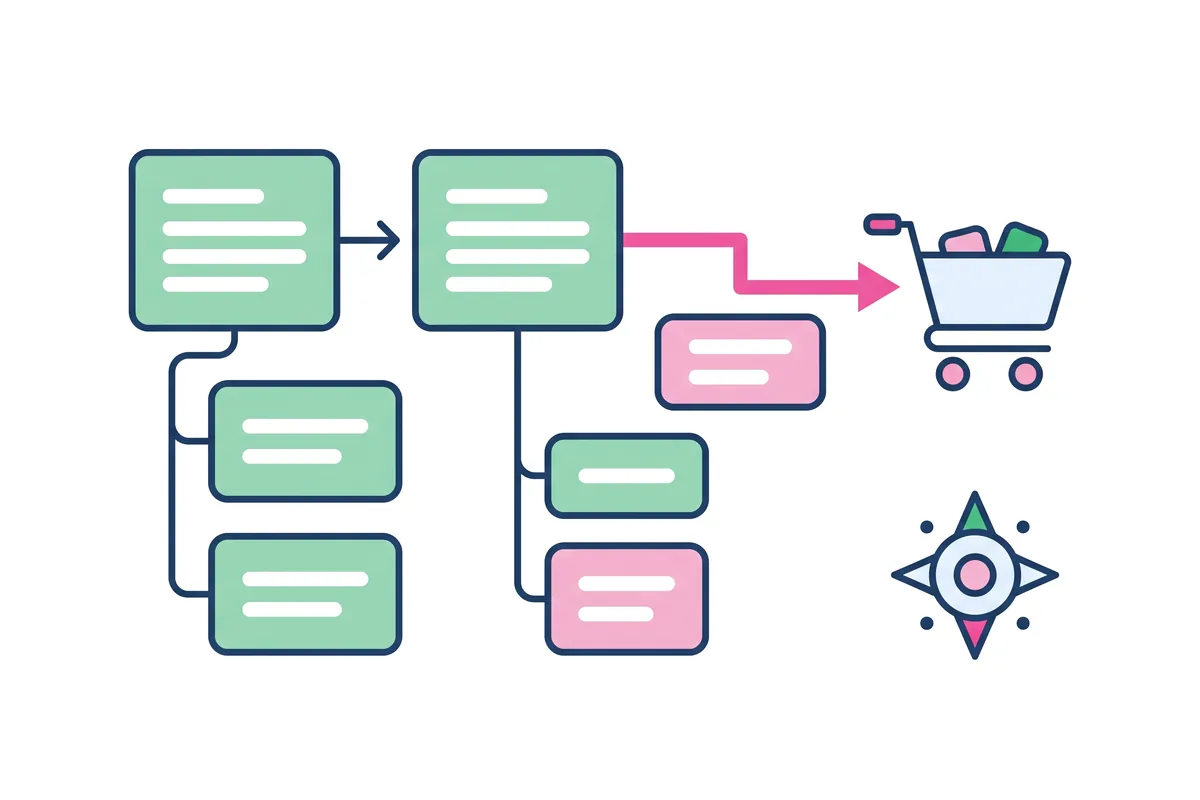
Site structure optimization doesn’t always begin with code. Often, the problem lies in your categories. If shoppers can’t find what they need within a few clicks, they’ll bounce. And if your taxonomy is inconsistent or overloaded, you’re not just losing customers, you’re damaging your SEO.
A focused category audit is one of the quickest ways to drive improvements in navigation, conversion rates, and long-term scalability.
Your categories are the framework of your e-commerce site. They guide how users explore, filter, and discover products. When categories are misaligned, shoppers get confused. When subcategories go too deep, labels become vague, or filters return irrelevant results, conversion rates take a hit.
But the impact doesn’t stop with user behavior. Search engines depend on clear structures to crawl and index your site effectively. Disorganized categories can break internal linking patterns, confuse your breadcrumb logic, and lead to poorly optimized URLs. That reduces your visibility on search engines, even for high-intent queries.
For these reasons, site structure optimization must begin with category clarity. Before you think about page speed or technical tweaks, fix the structure that affects every customer journey and every bot crawl. It’s foundational, and it’s where the biggest gains start.
Not all issues are obvious. Your store might look clean and modern, but that doesn't mean your navigation is working. In fact, a visually polished site with poor taxonomy can be more misleading than a basic one with good structure.
Here’s how to tell when your site structure optimization is overdue, and when your category navigation may be silently undermining your ability to convert traffic into sales:
You don’t need weeks to fix your structure. A 20-minute review can reveal the key changes needed to improve site structure optimization.
Check for clarity and distinctiveness. Do category names reflect how customers think? If not, revise to improve findability.
Categories buried too deep create friction. Flatten and group your structure for faster navigation and better SEO flow.
Avoid extremes. Redistribute or reassign products to make each category feel curated, not chaotic or empty.
Search by common attributes. If filters show too few results, or too many irrelevant ones, your data needs cleanup.
Follow user paths. Breadcrumbs should reflect logical, intuitive paths, not outdated or misaligned structures.
A manual audit is a great start. But automation is what keeps things consistent over time.
Extracts clean, structured product data that enables precise category assignments and filter accuracy.
Turns that data into SEO-optimized category content that matches shopper behavior and search trends.
Together, they reduce manual errors, enforce naming consistency, and ensure your structure grows with your catalog.
If your navigation is underperforming, it’s time to look deeper. Site structure optimization through a category audit helps you identify what’s broken and fix it fast, improving SEO, UX, and conversions in the process.
Let Naratix give your store the structure it deserves, clear, scalable, and built to convert.
Dynamic filters adapt to context, stock and campaigns in real time. Learn how to use dynamic product filters to help shoppers find products faster.

Temporary product filters surface seasonal promotions and limited collections. Learn how to use them to lift conversions without cluttering your store.
Every new filter affects site structure, user experience and SEO. Use this practical checklist to add ecommerce filters the right way, every time.
Newsletter